Enclustra MakarenaLabs
Explore Lira
The new line of Enclustra-based Edge AI platforms with MuseBox built in.
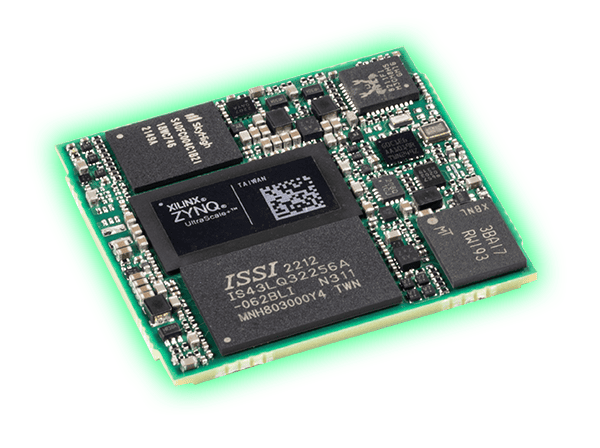
 Pluto LIRA
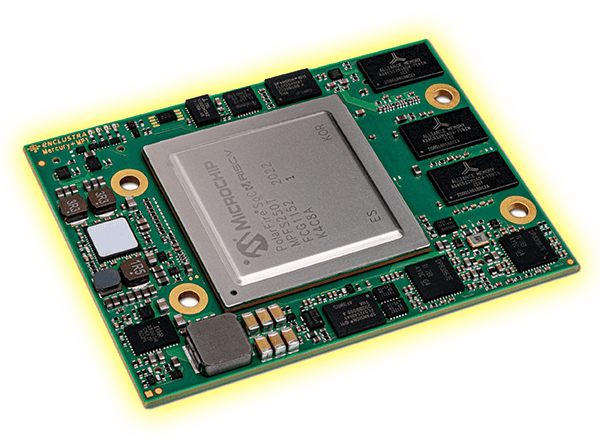
Mercury MP1 LIRA
What is LIRA?
LIRA is Enclustra’s new production line for Edge AI. Each platform combines an Enclustra System-on-Module with MuseBox, integrated by MakarenaLabs alongside the board software and interfaces.
Build pipelines that acquire data from cameras and sensors, process it on the device, and send results to your application. MuseBox coordinates the processing stages and routes compatible models to the acceleration backend selected for the platform.
Capture live data
Connect cameras, microphones and sensors through the interfaces configured for your SoM.
Run inference locally
Combine preprocessing, accelerated models and application logic in a single pipeline.
Export the pipeline
Build and validate the graph in the No-Code GUI, then export its configuration for headless operation.
Compare platforms.
| Platform |
|
|
|
|---|---|---|---|
| SoM | Enclustra Pluto XZU20 | Enclustra Mercury MP1 |
More LIRA platforms are on the way. Request another Enclustra SoM |
| Technology | AMD Zynq UltraScale+ MPSoC | Microchip PolarFire SoC | |
| Key capability | DEEPX DX-M1 inferenceFour-camera MIPI configuration | Hailo-8 accelerated inference |
Swipe to compare platforms
AI accelerators.
MuseBox coordinates the pipeline and sends compatible models to the configured inference backend. The Smart City and AgriTech demonstrators use Hailo for inference. Pablo’s Brain uses DEEPX on Pluto. The host processor runs the software stages around inference.
| Accelerator | Peak INT8 | Host connection | Reference configuration |
|---|---|---|---|
| Hailo-8 | 26 TOPS | M.2 via PCIe | Smart City on Pluto LIRA and AgriTech on Mercury MP1 LIRA |
| DEEPX DX-M1 | 25 TOPS | M.2 via PCIe | Pablo prototype on Pluto LIRA |
We can integrate other accelerators on request.
LIRA in action.
Three demonstrators show how MuseBox brings cameras, host processing and dedicated AI accelerators together on LIRA.
Pluto LIRA
Smart City AI Monitor
The ALOE digital twin generates urban camera feeds that Pluto XZU20 processes live on the ST11 base board. MuseBox and H4Z turn those feeds into dashboard outputs such as vehicle and pedestrian counts, traffic indicators and event alerts.
The Arm processing system runs the host application and coordinates the video pipeline. The Hailo accelerator runs the neural-network inference on the device. The simulated feeds let the team replay the same urban scenarios while testing the pipeline.
- SimulateALOE digital twin and virtual camera feeds
- Analyse on PlutoArm host processing and Hailo inference
- Surface eventsTraffic, counts and alerts in the dashboard
Mercury MP1 LIRA
AgriTech pest detection
Built in the MuseBox No-Code GUI, the demo connects a camera feed to leaf segmentation, pest detection and an event output. The visual graph lets the team inspect the segmented leaves and the detector output as the pipeline runs.
On the Mercury MP1 and PE3 setup, Hailo-8 provides accelerated inference over PCIe. The PolarFire SoC’s RISC-V Linux host runs MuseBox and coordinates the pipeline.
- Camera
- Leaf segmentation
- Pest detection
- Event
Pluto LIRA
Pablo’s Brain
A robotics prototype that takes a spoken request, selects a camera image, runs a DEEPX-accelerated CLIP stage and responds with local speech synthesis. The demonstrator uses PYNQ for rapid hardware and software integration.
- 4 × 1080p cameras
- 6 motors (supports up to 16)
- Microphone
- Speaker
What LIRA includes.
MakarenaLabs integrates MuseBox, the board software and the interfaces that connect the pipeline to the hardware. The package is configured for the selected Enclustra SoM and application.
- MuseBox
- Reusable blocks for input, processing, inference and outputs. Build and inspect the graph in the No-Code GUI, then export the configuration to run it headless.
- Platform software
- The Linux board support package, drivers and runtime for the selected SoM. Reference setups include PYNQ on Pluto and a RISC-V Linux BSP on Mercury MP1.
- Hardware integration
- Carrier-board I/O, camera and sensor interfaces, FPGA configuration and the accelerator runtime. The integration depends on the selected SoM and the application.